
Next-Generation Subsea Engineering Is No Longer The Future — It’s Here
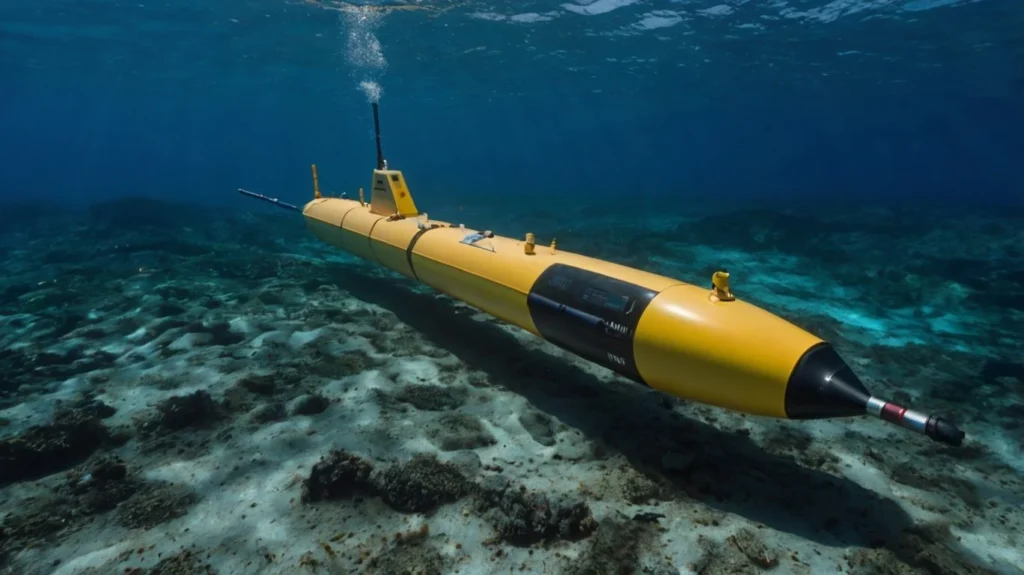
Three kilometres beneath the Atlantic, subsea engineering is undergoing a quiet revolution. Autonomous underwater vehicles (AUVs now map pipeline corridors in hours rather than days, while smart flexible risers embedded with fibre-optic sensors detect corrosion long before failure occurs. These are no longer experimental concepts—they are operational realities already entering Nigerian offshore fields.
AUVs: Faster, Smarter, Cheaper Surveys
Modern work-class AUVs combine multibeam sonar, sub-bottom profiling and environmental sensors in compact, car-length platforms. Running pre-programmed survey grids at high speed, they cut survey timelines by up to 70 percent while delivering centimetre-level seabed resolution. By removing the need for large survey vessels, operators reduce offshore costs significantly and update digital field models within hours, not weeks.
Smart Flexible Risers: Predicting Failure Before It Happens
Flexible risers remain critical subsea lifelines, but corrosion within their annulus has long posed a costly risk. New-generation smart risers integrate fibre-optic and MEMS sensors that continuously monitor strain, temperature and structural integrity. When combined with electromagnetic inspection crawlers, operators can detect individual wire failures without removing the riser—lowering inspection costs and extending asset life.
Robotics and AI Close the Loop
Data alone is no longer enough. Artificial intelligence now analyses subsea data streams to predict fatigue life and maintenance windows. The next phase is autonomous intervention: robotic systems capable of docking, inspecting and maintaining subsea equipment without surface vessels—reducing vessel days by up to 90 percent in early trials.
Lighter Materials, Longer Endurance
Advances in solid-state batteries, fuel cells and lightweight composites are extending AUV endurance while reducing payload weight. Carbon-fibre pressure hulls and titanium components are also easing topside loads, improving FPSO performance and longevity.
Building Local Capability
Subsea engineering is no longer an expatriate-only domain. Nigerian engineers and technicians are increasingly trained to international standards, supporting advanced inspection, robotics and fibre-optic monitoring offshore. Recent projects have demonstrated that high-end subsea technology and local content development can progress together.
What Comes Next
By the end of the decade, the industry will see resident AUVs permanently stationed on subsea fields, self-monitoring riser systems, and lower-carbon offshore operations powered by hybrid energy sources.
For operators across Nigeria’s deep-water assets, the message is simple: subsea innovation is no longer optional. Those who adopt these technologies will unlock stranded value—while those who wait risk being left behind.